Direct answer: Tow-behind aerator attachments are designed to loosen compacted soil, improve drainage, and promote deeper root growth for lawns and fields when used with riding mowers or tractors. They are best for homeowners with medium-to-large lawns, or farm areas where quick, wide coverage is desired. This guide highlights five reliable options and explains who each is best for, along with practical buying tips and a concise FAQ.
Buyer profiles covered in this guide include: large-yard owners needing broad coverage; users seeking heavier weight capacity for deeper cores; buyers prioritizing rust resistance and durability; and those wanting easy hitch setups for quick attachment. The following table summarizes the selected products for quick reference.
| Product | Width | Core Depth | Weight Capacity | Best For |
|---|---|---|---|---|
| VEVOR Tow Behind Plug Aerator, 40 in | 40 in | Up to 3 in | 120 lbs | Large lawns, deeper aeration |
| VEVOR Tow Behind Plug Aerator, 32 in | 32 in | Up to 2 in | 100 lbs | Medium-sized yards, balanced performance |
| VEVOR Tow Behind Plug Aerator, 40 in (150 lbs) | 40 in | Up to 2 in | 150 lbs | Very heavy-duty, deeper penetration |
| Suchtale 40-Inch Tow Behind Plug Aerator | 40 in | Up to 2 in | 24 coring plugs | Low-maintenance, robust steel build |
| Vlaeng 48″ Tow Behind Aerator | 48 in | Up to 3 in | 32 knives | Very wide coverage, tough soils |
VEVOR Tow Behind Plug Aerator, 40 in Lawn Core Aerator Tool Universal Hitch
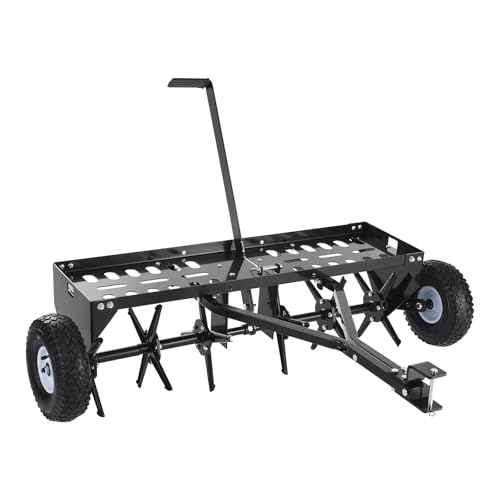
The 40-inch aeration width covers more ground per pass, reducing total passes needed for larger lawns. Core tines reach up to 3 inches, making it suitable for compacted soils. Weight tray supports up to 120 lbs, aiding deeper penetration and stable operation during towing. Strap slots on the tray help secure additional weights so they stay in place during turns. Best for: large lawns or fields where faster coverage matters and deeper cores are desired. Caution: add weights evenly to avoid instability on uneven terrain.
VEVOR Tow Behind Plug Aerator, 32 in Lawn Spike Aerator

This 32-inch model provides a balanced option for mid-sized yards. It penetrates up to 2 inches and uses a weight tray that supports up to 100 lbs for deeper cores. The assembled design features a folded-edge tray for durability and stable towing. Best for: homeowners who want a lighter, easier-to-maneuver aerator with respectable coverage. Limitation: narrower width means more passes on very large areas.
VEVOR Tow Behind Plug Aerator, 40 in with 150lbs Capacity

This model combines a 40-inch working width with a higher 150 lbs weight capacity, enabling deeper core penetration and more stable operation on uneven terrain. The tines reach up to 2 inches, suitable for cool-season lawns that require more force to break through compacted soil. Best for: users who need maximum ballast for deeper aeration and bigger spaces. Caution: higher weight requires careful handling on slopes and uneven ground.
Suchtale 40-Inch Tow Behind Spike Aerator

Features 10-star-shaped steel tines with 8″ diameter, each providing 10 unequal tips to penetrate compacted soil up to 2 inches. Independent rotation helps maintain coverage during turns. The all-steel construction, reinforced side plates, and a thick tow bar contribute to durability. Best for: users facing stubborn, heavily compacted soils. Limitation: assembly is required, and parts guidance is essential for proper setup.
Vlaeng 48″ Tow Behind Aerator
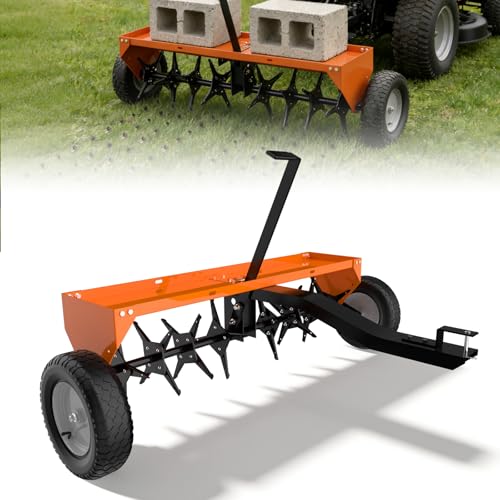
The 48-inch width provides wide coverage and 32 knives with rust-resistant construction for durability in challenging soils. An overall weight capacity up to 230 lbs is supported by a sturdy alloy frame and heavy-duty wheels, enabling deeper penetration when weighted properly. Best for: large yards with dense thatch or compacted soil where extensive coverage and robust knives are required. Caution: secure the handle during transport to avoid shifting knives during movement.
Buying Guide: Key Considerations For Tow-Behind Aerators
- Working width: Larger widths cover more ground in fewer passes but require a bigger tractor hitch and more storage space. Choose based on yard size and mower compatibility.
- Core depth and tine design: Deeper cores improve soil aeration but demand more weight and stability. Star-shaped or multiple tines can reduce missed areas during turns.
- Weight capacity: Higher weight capacity helps tines press deeper. Balance with tractor capacity and stability on slopes.
- Durability: Look for rust-resistant materials, reinforced side plates, and heavy-duty axles for long-term use in varied weather conditions.
- Ease of hitching and setup: Universal or quick-connect hitches save time. Check included instructions and assembly requirements.
- Maintenance: Regular removal of debris from knives and cleaning after use extend life and prevent corrosion.
Frequently Asked Questions
- What is the typical depth achieved by these aerators?
Most models reach 2 inches, with some reaching up to 3 inches in ideal conditions. - Can I use these with a standard riding mower?
Yes, most are designed for compatibility with common riding mowers and garden tractors via universal hitches. - Do heavier aerators require special handling?
Heavier models need careful control on slopes and level ground to prevent tipping or damage to the hitch. - How often should I aerate a lawn?
For cool-season grasses, fall or spring is typical; warm-season lawns may benefit from summer aeration in hot climates. Always follow soil and lawn health indicators. - What maintenance is recommended after use?
Remove soil and debris from tines, rinse, dry, and store in a dry place to prevent rust; inspect for wear before next use. - Are these truly “plug” aerators?
Many models use coring tines that pull cores; some use spike designs. The feature list typically clarifies core depth and number of plugs.