Looking for the best tomato planters for a patio? This guide concentrates on tall, self-watering, and trellis-equipped options that maximize vertical space while keeping watering simple. Designed for urban patios, balconies, and small yards, these planters suit container gardeners who want healthy tomato yields with minimal maintenance. Top picks are ideal for enthusiasts who crave neat growth, easy mobility, and durable materials. Each option is evaluated for who it’s best for, plus practical pros and limitations.
| Product | Best For | Key Benefit | Notes |
|---|---|---|---|
| Monirsen 57″ Self-Watering Tomato Planter | Patio growers seeking vertical space | Self-watering with hidden reservoir | Tower design saves space; sturdy PP material |
| MQFORU 2-Pack 57″ Tomato Planters | Multi-plant setups on patios | Adjustable height; self-watering | Two-pack option offers more planting area |
| TeCreatio 56.5″ Tomato Planter | Mobility and easy sun exposure control | 5 wheels; water reservoir with indicator | Great for moving with sun and weather |
| Growia 56″ Tomato Planter With Trellis | Space-saving vertical climbers | Heavy-duty metal trellis; self-watering | Sturdy for taller vines |
| LINEX 41.3” Trellis Planter | Compact patios with decorative trellis | Self-watering reservoir; durable materials | Smaller footprint; versatile integration |
Monirsen 57″ Self-Watering Tomato Planter
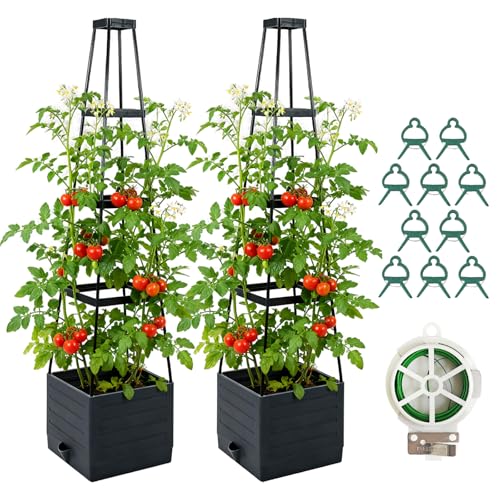
This tall, self-watering planter is best for city dwellers who want a growing system that minimizes daily watering tasks. The siphon-based reservoir keeps soil moisture steady, reducing overwatering and underwatering. The design includes a 57-inch-tall tower with a separate planter box and trellis that can be used together or separately, making it adaptable for tomatoes, climbers, and flowering vines.
Who it’s best for: urban patio gardeners who need vertical gardening and a self-watering solution in a single unit. Why selected: its height, modularity, and water reservoir support low-maintenance cultivation with a neat, space-saving footprint.
Note: The setup relies on proper reservoir filling and regular refill intervals to maintain soil moisture across extended periods.
MQFORU 2-Pack 57″ Tomato Planters

These 57-inch planters come as a two-pack, offering versatility for a multi-plant setup on patios or balconies. The planters feature a built-in reservoir and a bottom grid that amplifies the siphon effect, stabilizing hydration while limiting daily watering needs. Height is adjustable, so you can configure one, two, three, or four layers as your vines grow.
Who it’s best for: homeowners who want flexible, stacked growth with a self-watering system. Why selected: the adjustable multi-layer configuration allows scaling with plant size and space constraints.
Limitation: assembly complexity rises with additional layers, so plan installation time accordingly.
MQFORU Tomato Planter Boxes With Trellis Outdoor

This 57-inch self-watering planter offers a tall square footprint ideal for taller tomato varieties and other climbing plants. The bottom grid promotes siphon-driven watering, with a separate side water injection port to maintain soil moisture without frequent daily care. The unit supports indoor or outdoor use and is designed to withstand varied weather conditions.
Who it’s best for: gardeners who want a tall, single-structure planter that can be used in multiple environments. Why selected: reliable self-watering with adjustable height and sturdy construction.
Limitation: like other tall planters, wind exposure can require additional stabilization in very windy locales.
TeCreatio Tomato Planter Pot With Mobility

This 56.5-inch tall planter emphasizes mobility and water management. It includes five wheels for easy relocation to optimize sunlight, plus a water reservoir with a level indicator so you can gauge moisture without guesswork. A 2-gallon reservoir supports longer intervals between fills, helping busy gardeners maintain healthy tomato growth.
Who it’s best for: gardeners who want the ability to move planters to chase sun or weather shifts. Why selected: wheels and water indicator improve practical daily management.
Caution: wheels add moving parts that may require periodic maintenance to ensure smooth operation on uneven surfaces.
Growia 2 Pack Tomato Planter With Trellis

Growia’s 56-inch vertical planters are designed to grow tomatoes, cucumbers, beans, and other climbers upward. The self-watering feature keeps roots consistently hydrated, reducing the risk of drought stress. The heavy-duty metal trellis provides strong support for heavy fruiting stems and tall vines, reducing bending or collapse risk.
Who it’s best for: homes with tighter spaces who still want robust vertical support for climbing crops. Why selected: sturdy metal trellis and vertical design maximize height while maintaining stability.
Limitation: metal components may heat up in direct sun; consider shading or placement planning to prevent heat stress on plants.
LINEX Raised Garden Bed Planter With Trellis

LINEX combines a 41.3-inch trellis with a self-watering reservoir and four drainage holes to prevent root rot. The planter is built from fade-proof PP material, with a sturdy alloy steel trellis frame. It’s suitable for outdoor patios and can support a variety of climbing plants beyond tomatoes, including flowering vines.
Who it’s best for: patio gardeners seeking a decorative yet practical planter with a lower height footprint. Why selected: balanced durability, self-watering, and a visually appealing trellis.
Limitation: shorter height may limit very tall tomato varieties; better for mid-sized climbers or compact varieties.
Buying Guide: Key Purchase Considerations
- Vertical space vs. footprint: Choose a tall, narrow unit for small patios or a wider bed if you have more floor space and want to grow multiple plants side-by-side.
- Watering system: Self-watering reservoirs reduce frequent watering. Look for a visible water level indicator and a side port for convenient refill.
- Trellis strength: Heavier-duty trellises support heavy fruiting stems; ensure the frame material (plastic vs. metal) fits your climate and maintenance preference.
- Mobility: Planters with wheels simplify sun-shift adjustments. Check wheel quality and floor compatibility to avoid scratches.
- Materials and durability: UV-resistant plastics resist fading; metal components offer sturdiness but may heat up. Consider all-weather performance for year-round use.
- Assembly and height adjustments: Some models offer adjustable layers or layered configurations. Confirm the number of layers and ease of assembly before purchase.
- Maintenance and drainage: Adequate drainage prevents root rot. A self-watering reservoir should be paired with a drainage plan to prevent standing water.
FAQ
- What is the best height for a tomato planter on a patio?
A: Heights around 50–60 inches work well for upright access, pruning, and harvesting without bending. Consider taller options for dense vertical growth or limited ground space. - Do these planters require daily watering?
A: No. Self-watering reservoirs and siphon-based systems reduce the need for daily watering, though periods of extreme heat may still require topping up. - Can I use these planters for plants other than tomatoes?
A: Yes. Trellised climbers like cucumbers and beans, as well as flowering vines, can thrive in these setups. - Are wooden planters better than plastic for patios?
A: Wooden planters offer natural aesthetics but require more maintenance. Plastic and metal options typically resist weathering better and are easier to clean. - Is a larger capacity reservoir better?
A: A larger reservoir reduces watering frequency but adds weight. Choose based on your watering needs, climate, and how often you’re away from home. - Can these planters withstand windy patios?
A: Most taller units include sturdy frames, but in very windy locations additional anchoring or placement behind a windbreak may be helpful.