Choosing the best soil for veggies is essential for a healthy and productive garden. Whether you’re growing in containers or garden beds, the right soil improves nutrient uptake, moisture retention, and root development. Below is a summary table of top-rated potting soils and organic mixes specially formulated to boost your vegetable garden’s success.
| Product Name | Brand | Features | Size |
|---|---|---|---|
| Miracle-Gro Organic Outdoor Potting Mix | Miracle-Gro | Quick-release natural fertilizer, OMRI Listed, made with responsibly sourced peat | 16 qt. |
| Back to the Roots 100% Organic Potting Mix | Back to the Roots | Peat-free, moisture control, balanced pH, versatile for veggies and herbs | 12 qt. |
| Back to the Roots 3-in-1 Seed Starting Mix | Back to the Roots | Organic, peat-free, contains worm castings, yucca extract, and pH balancing lime | 6 qt. |
| Miracle-Gro Potting Mix, 2-Pack | Miracle-Gro | Feeds plants up to 6 months, promotes bigger plants, for various container plants | 8 qt. each |
| Compressed Organic Potting Soil by Organic Plant Magic | Organic Plant Magic | Expands 4x when watered, rich in 55+ trace minerals, retains moisture longer | Compact bag |
Miracle-Gro Organic Outdoor Potting Mix, 16 qt.

The Miracle-Gro Organic Outdoor Potting Mix is designed for outdoor container plants, supporting flowers, vegetables, herbs, annuals, and perennials. It contains a quick-release natural fertilizer that feeds plants for up to 2 months, promoting healthy growth during critical early stages. Made with responsibly sourced peat from certified producers, this mix balances environmental responsibility with performance. It’s an excellent choice for gardeners who prefer organic soils with steady nutrient release tailored to vegetable gardening in outdoor containers.
Back to the Roots 100% Organic Peat-Free Potting Mix, 12 Qt.
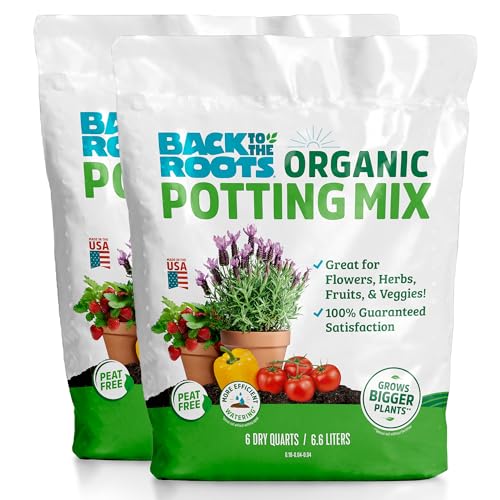
This 100% organic, peat-free potting mix by Back to the Roots is made from upcycled plant matter and wood fines, promoting a lighter carbon footprint. Ideal for herbs, vegetables, fruits, and flowers, it controls moisture with yucca extract and balances pH with dolomitic limestone. This versatile soil offers sustainable gardening benefits along with optimized moisture retention and nutrient balance—key for healthy vegetable development in various environments.
Back to the Roots 3-in-1 Seed Starting Mix, 6 Qt.

Perfect for starting seeds of vegetables, herbs, and flowers, this 3-in-1 seed starting mix includes nutrient-rich worm castings, mycorrhizae for enhanced root growth, and yucca extract for moisture control. Additionally, the dolomitic limestone component balances soil acidity, preventing nutrient deficiencies. This organic, peat-free mix supports strong root development and healthy seedlings for a successful garden foundation indoors or out.
Miracle-Gro Potting Mix, 2-Pack of 8 qt. Bags

This Miracle-Gro Potting Mix bundle is ideal for container gardens with flowers, vegetables, shrubs, and perennials. It feeds plants for up to 6 months, offering a long-lasting nutrient supply that can help your plants grow twice as big compared to unfed plants. Each bag can fill multiple 8-inch containers, making it practical for various planting setups, and ideal for gardeners seeking a reliable feeding potting mix.
Compressed Organic Potting Soil by Organic Plant Magic

This compressed organic potting soil expands up to 4 times its size when mixed with water, providing up to 3 gallons of rich soil. It’s packed with essential nutrients and over 55 trace minerals to support vigorous growth. The soil retains moisture up to 3 times longer, ensuring roots receive consistent hydration and aeration. Suitable for indoor and outdoor use, it is practical for seeds, starts, transplants, raised beds, and containers.
Buying Guide: Choosing the Best Soil for Your Vegetable Garden
Organic vs. Synthetic Fertilization
When selecting soil for veggies, consider whether you prefer organic nutrient sources or synthetic fertilizers. Organic soils typically use natural amendments like worm castings, compost, and dolomitic limestone that improve soil biology and nutrient availability gradually. Synthetic fertilizers, while effective, may offer quicker nutrient release but less long-term soil health benefits.
Soil Composition and Drainage
The best veggie soil balances moisture retention and drainage to avoid root rot and drought stress. Look for mixes with coconut coir or peat alternatives that help maintain moisture, plus perlite or similar aerators to ensure airflow and prevent compaction. Yucca extract is often added to enhance moisture regulation.
pH Balance
Vegetables generally thrive in soil with a near-neutral pH (6.0–7.0). Many premium potting mixes include dolomitic limestone to buffer the soil acidity and maintain nutrient availability. Check whether the soil offers balanced pH for optimal mineral uptake.
Soil Texture and Use Case
For container gardening, lightweight, well-aerated soils are best to support root expansion and prevent waterlogging. In-ground garden soils may benefit from organic amendments mixed into native soil to improve fertility and structure. Seed starting mixes require finer-textured soils rich in nutrients and moisture retention for young, delicate plants.
Sustainability and Carbon Footprint
For eco-conscious gardeners, peat-free and upcycled organic soil mixes reduce environmental impact. Many brands now offer peat alternatives made from wood fines or plant matter, which support sustainable gardening without sacrificing quality.
Longevity of Nutrients
Consider how long the soil will feed your veggies. Some mixes provide nutrients for 2 months, others up to 6 months. If you want less frequent fertilizing, look for longer-lasting feeds but supplement with regular feeding according to your garden’s demands.
Additional Additives
Some soils have beneficial additives like mycorrhizae fungi that form symbiotic relationships with roots, enhancing nutrient and water uptake. Others include trace minerals critical for plant health. Choose based on the specific needs of your vegetable varieties and soil conditions.