Answering the question, which shade sail or canopy works best for the beach, this guide highlights five top options designed to stay put, provide UPF 50+ protection, and be practical for families, solo travelers, or group outings. Each pick offers wind-friendly design, easy setup, and clear advantages depending on wind, space, and travel needs. The buyer’s intent here is to find a beach shade that balances stability, shade area, and portability for a comfortable day by the sea.
| Product | Best For |
|---|---|
| MoKo Beach Shade Canopy | Family beach trips with wind-chill tolerance |
| Solbello Shade | Wind-driven setups with quick use |
| Shibumi Shade Quiet Canopy Version | Group shade, wind-assisted stability |
| besuhot Beach Tent Sun Shelter | Higher shade clearance and quick install |
| ALYCASO Beach Wind-Powered Shade Canopy | Lightweight travel shade with wind support |
MoKo Beach Shade Canopy Review

The MoKo Beach Shade Canopy is designed as a wind-friendly sunshade for 4–6 people. It features a wind-lofted design that creates fluttering shade when breezes reach around 3 mph, helping to establish a comfortable resting area. In calmer conditions, a No-Wind Mode with pole and guy ropes provides stability. The structure emphasizes reinforced stability with sand bags, ground pegs, and robust guy lines to reduce wind pressure. Best for families who expect variable beach winds and want flexible setup options.
Who it’s best for: families or groups that want a balance of wind-resilience and ease of setup. Why selected: its dual mode (windy and windless) makes it versatile for fluctuating beach conditions. Caution: setup relies on proper anchoring; without anchors, wind resistance may be limited in stronger gusts.
Solbello Shade — Wind-Driven Beach Umbrella

Solbello emphasizes being wind-driven and easy to set up, with a single-person setup time that can be completed in about 30 seconds. It includes a No-Wind Kit for rare, calm beach days and gentle wind conditions. Best for individuals or couples who want a quick, simple shade solution with wind-assisted stability. Caution: while fast to deploy, it may be less spacious than larger canopy systems and may not shield a larger group as effectively as bigger models.
Who it’s best for: travelers seeking fast shade with optional wind assistance. Why selected: its quick setup and optional wind kit address both windy and calm beach days. Limitation: less overall shade area for big groups.
Shibumi Shade Quiet Canopy Version

The Shibumi Shade Quiet Canopy Version offers a large 150 sq ft of UPF 50+ shade for up to 8 people. It is wind-powered and designed to float on the breeze, providing a calm, quiet shade experience without flapping or rattling. Setup is feasible for a single person in about three minutes, and the design emphasizes open airflow for cooler shade. Best for larger groups that want generous shade without heavy tent structures. Caution: wind-regulated performance means it relies on consistent breeze to function at its best.
Who it’s best for: larger beach groups or families needing expansive shade. Why selected: combination of wind-powered stability and ample shade. Limitation: wind conditions are a key factor in performance.
besuhot Beach Tent Sun Shelter 10×10
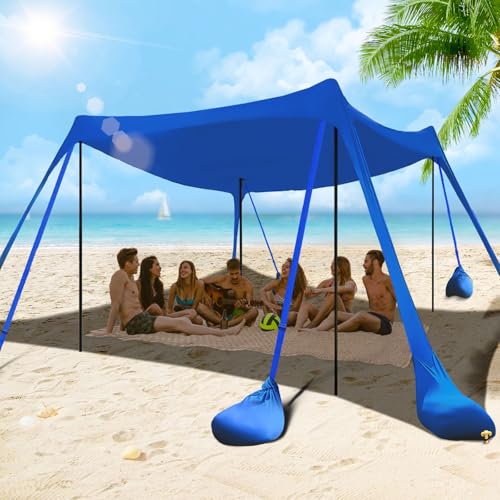
Besuhot offers a 10×10 ft configuration with UPF 50+ protection and eight included sandbags. The height upgrade addresses low clearance and ventilation issues, and the poles come pre-strung with steel cables and elastic cords for quick assembly. Best for beachgoers who want higher shade clearance and a quick, stable setup. Caution: higher height can slightly increase wind exposure if anchors aren’t properly secured.
Who it’s best for: those needing more headroom and faster assembly on windy beaches. Why selected: it balances shade area, ease of setup, and wind-stability features. Limitation: taller setups can require more careful anchoring in gusty conditions.
ALYCASO Beach Wind-Powered Shade Canopy

ALYCASO’s wind-powered canopy aims to deliver 150 sq ft of shade for up to 6 people with UPF 50+ protection. It emphasizes portable design, a manageable 4 lb main structure, and a windless kit as an optional add-on. Best for travelers who prioritize light weight and wind-assisted stability. Caution: the wind-powered feature requires a minimum breeze to function effectively; in still air, the windless kit becomes important for setup stability.
Who it’s best for: travelers who want a compact, wind-assisted shade with decent shade coverage. Why selected: strong portability and wind-assisted design for casual beach days. Limitation: performance depends on wind presence; may require wind for optimal stability.
Buying Guide: Shade For The Beach — What To Consider
- Shade Area: For groups of 4–6, look for 100–150 sq ft to avoid crowding. Larger families may prefer 150–300 sq ft.
- Wind Dynamics: If beaches blow consistently, wind-powered shades reduce tipping risks. In calm days, windless kits or stabilizers help.
- Portability: Weigh weight (4–8 lbs) and pack size. Consider carry bags and how easily it fits into a car trunk or overhead luggage.
- Setup Speed: Quick setups save time for kids and adults. Solo-friendly models typically pitch in under 5 minutes.
- UPF Sun Protection: Aim for UPF 50+ for strong sun protection; 30+ offers basic sun defense but less coverage.
- Stability Features: Look for sandbags, ground pegs, guy ropes, or wind assist. Windy beaches require robust anchoring.
- Versatility: Some models offer windless kits or adjustable height to adapt to sand conditions and sun angle.
- Maintenance: Check fabric durability, seam construction, and cleaning ease for repeated beach use.
Frequently Asked Questions
- What is wind-powered shade and when does it work best?
Wind-powered shade sails rely on even light air movement to generate stability. They work best in gentle to moderate wind, reducing flapping and increasing steadiness compared to traditional umbrellas.
- How much shade do I need for a family of four?
Around 100–150 sq ft usually provides comfortable space for four to six people with room for chairs and a cooler.
- Are windless kits necessary?
Windless kits help stabilize shade structures on very calm days or in shifting, unpredictable winds, ensuring a reliable shelter.
- What should I anchor shade canopies with in sandy beaches?
Use sandbags, ground pegs designed for sand, and sturdy guy lines. Proper anchoring prevents displacement during gusts.
- Which shade is easiest to travel with?
Lightweight, compact models with a dedicated carry bag and simple pole assembly are the easiest to travel with.
- Do these shades guarantee sun protection all day?
Most provide UPF 50+ protection, but shading effectiveness changes with sun angle, fabric wear, and wind movement.