Answering your search: this guide highlights top saltwater and sand filter pump systems for above-ground pools, helping you choose the right setup for your pool size and maintenance preferences. The best choices balance filtration power, ease of use, and compatibility with saltwater chlorine systems. Ideal buyers include: families seeking low-chemical maintenance, those upgrading from standard cartridges, and owners with pools up to about 15,000 gallons. Below is a quick comparison of five standout products to consider.
Summary of selected products
- INTEX 2,650 GPH Krystal Clear Sand Filter Pump with QS1200 Saltwater System — best all-in-one for mid-to-large above-ground pools (4,800–15,000 gallons).
- INTEX Krystal Clear Saltwater System for Above Ground Pools up to 7,000 Gallons — best value upgrade for smaller to mid-size pools.
- AQUASTRONG 16in Sand Filter Pump with 3/4 HP — best for powerful circulation up to 16,000 gallons.
- Intex 3000 GPH Sand Filter Pump with Built-In Timer + Krystal Clear Saltwater System Maintenance Set — best all-in-one bundle for ease of setup.
- Intex Krystal Clear Saltwater System for Above Ground Pools up to 15,000 Gallons — best for large above-ground pools seeking low-chemical maintenance.
INTEX 2,650 GPH Krystal Clear Sand Filter Pump and Saltwater System

Best for mid-to-large above-ground pools seeking an integrated sand filtration with a saltwater chlorine system. This unit combines a sand filter pump with the QS1200 saltwater system, enabling softened, cleaner water with reduced chemical usage. It supports pools from roughly 4,800 to 15,000 gallons, making it a solid all-in-one solution for a broad range of setups. The built-in 24-hour timer and multiple cycling options help automate maintenance. A potential limitation is the size and setup effort required for very small yards or compact spaces.
INTEX Krystal Clear Saltwater System for Above Ground Pools Up to 7,000 Gallons
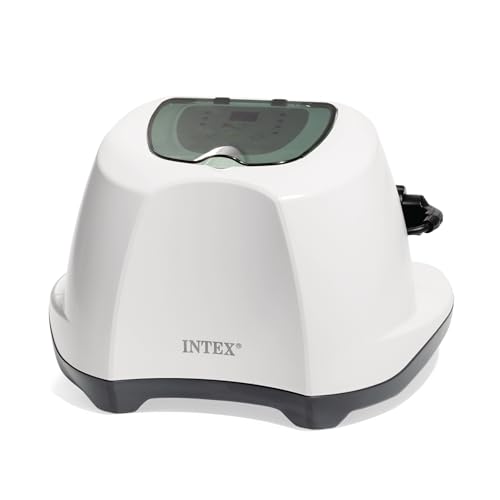
Best for smaller to mid-sized pools seeking a dedicated saltwater upgrade. The QS500 system converts salt to chlorine, helping to reduce overall chemical usage while keeping water soft and clear. It features an easy control panel and a built-in 24-hour timer with 6, 10, and 14-hour self-cleaning cycles, supporting straightforward automation. Choose this if your pool is under 7,000 gallons and you want a simpler, more compact saltwater solution without a full sand filter overhaul. A limitation is that it may not cover very large pools efficiently.
AQUASTRONG 16in Sand Filter Pump with Timer

Best for powerful circulation and larger above-ground setups. The AQUASTRONG unit delivers about 3,800 GPH of filtration, suitable for pools up to 16,000 gallons. It includes a versatile 6-way valve (Filter, Backwash, Rinse, Recirculate, Waste, Closed) for flexible maintenance. The built-in 24-hour timer supports energy-saving scheduling. Limitations include the need to manage a larger footprint and more complex plumbing for some backyards, and the instruction to stop the pump before changing valve positions to avoid damage.
Intex 3000 GPH Sand Filter Pump + Krystal Clear Saltwater System Maintenance Set
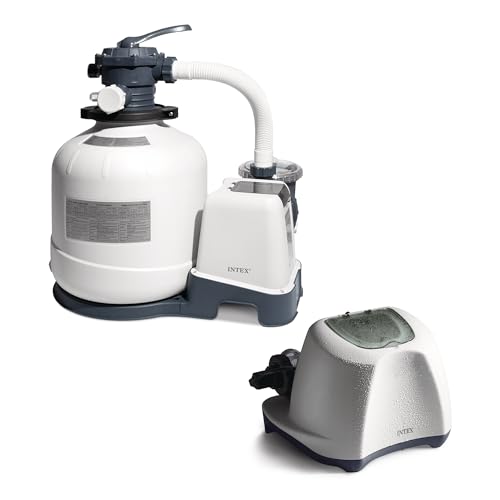
Best for comprehensive setup with a built-in timer and Hydro Aeration Technology for better water circulation. This bundle pairs a 3000 GPH sand filter pump with a Krystal Clear saltwater system designed for above-ground pools and includes multiple control functions (six modes for backwash, rinse, recirculate, drain, filter, close). It’s well-suited for owners who want a cohesive, ready-to-run filtration and saltwater solution. A potential drawback is that the combined system may require more initial space and setup effort than single-function units.
Intex Krystal Clear Saltwater System for Above Ground Pools Up to 15,000 Gallons

Best for large above-ground pools requiring extended saltwater operation. The QS1200 system enables saltwater chlorination for pools up to 15,000 gallons, reducing chemical usage while maintaining clear, safe water. It features an easy control panel and a built-in 24-hour timer with 6, 10, and 14-hour cycles. Best for owners who want low-maintenance saltwater operation at a larger scale. A limitation is that it relies on compatible pump and filtration hardware to realize full benefits, which may require matching components.
Buying Guide
- Pool size compatibility: Choose a system rated for your pool’s gallon capacity to ensure effective filtration and chemical management.
- Filtration vs. saltwater balance: Sand filters excel at debris removal; saltwater systems handle chlorination. Some units combine both for convenience.
- Automation and timers: Built-in 24-hour timers reduce daily maintenance and ensure consistent filtration cycles.
- Ease of installation: Bundled sets simplify setup but may require extra space and compatible plumbing fittings.
- Maintenance considerations: Self-cleaning modes and backwash options impact ongoing upkeep and chemical use.
- Future upgrades: If you anticipate pool size changes or additional features, consider modular systems that scale.
- Warranty and support: Look for units with reasonable warranties and accessible customer support for components and troubleshooting.
FAQ
- Q: Can I mix sand filters with saltwater systems on the same pool? A: Yes, many units combine sand filtration with a saltwater chlorination system for convenient maintenance.
- Q: What pool size is best for a saltwater system? A: Systems are available for a wide range; pick one matching your pool’s gallon capacity to maintain clear water and balanced chemistry.
- Q: Do I need a separate pump for a saltwater system? A: Most saltwater systems pair with the filtration pump; ensure compatibility with your current pump’s flow rate and plumbing.
- Q: How often should I backwash a sand filter? A: Backwash frequency depends on use and debris load; follow the timer settings and visual clarity of water for guidance.
- Q: Are saltwater systems safer for families? A: Saltwater systems can reduce chemical odor and stabilize chlorine production, contributing to a gentler swimming environment when properly maintained.
- Q: What maintenance mistakes should I avoid? A: Avoid running the pump without water, and don’t switch valve positions while the pump is on to prevent damage.