Answered: If you need safer, more stable access to a roof or wall area from an extension ladder, a ladder stabilizer is essential. This guide compares five sturdy options designed to protect gutters, siding, and finishes while improving balance on uneven surfaces. Best for professional painters, roofers, and diligent homeowners alike, these stabilizers help prevent slips and wall damage. Each product is evaluated for compatibility, safety features, and practical limitations to help you choose the right standoff for your ladder type and job.
Summary table of selected products:
- Ladder-Max Ladder Stabilizer — Best for universal ladder compatibility and direct roof access.
- 2-in-1 Heavy Duty Ladder Stabilizer with Roof Hooks — Best for dual use on gutters and roof work.
- Ladder Stabilizer, Extended Ladder Stabilizer — Best for wall clearance and roof gutters with non-slip tips.
- Fo ozet Ladder Stabilizer — Best lightweight aluminum option with wall protection and patent backing.
- Tie Down Roof Zone Height Adjustable Standoff — Best for quick setup on various ladder types.
Ladder-Max Ladder Stabilizer

The Ladder-Max stabilizer provides 19 inches of safe work area and is certified for direct roof placement. It uses four points of contact with heavy-duty non-marring tips and is made in the USA from rust-resistant steel. Best for homeowners, roofers, painters, and contractors who want universal compatibility with major ladder types (aluminum, wood, fiberglass) and enhanced gutter protection. A limitation is its weight relative to lighter aluminum options, which may affect portability on stairs or in tight spaces.
2-in-1 Heavy Duty Ladder Stabilizer with Roof Hooks

This stabilizer is built from premium carbon steel, offering up to 500 lbs of support. It features integrated roof hooks for roof work and removable standoff arms for gutter and wall tasks. Best for professionals who need a single system for multiple job types, especially when switching between gutter cleaning and roof repairs. Note that the thicker steel adds weight, so portability should be considered if you frequently move ladders by hand.
Ladder Stabilizer, Extended Ladder Stabilizer Accessory

Designed with four fixed points on two steps and a four-point contact structure, this steel stabilizer supports up to 450 lbs. It is described as non-marring and protective for gutters, siding, and finishes. Best for classic ladder setups around windows, gutters, and roof edges. A potential limitation is its heavy-duty steel design, which may reduce portability for casual homeowners with infrequent use.
Startingtool Ladder Stabilizer

Startingtool offers an adjustable ladder stabilizer with a T-shaped structure and a balance bar design. It ensures the ladder remains horizontal, spreading weight evenly for stable performance during exterior work. Best for commercial settings or frequent users who require consistent stability across different roof angles. It includes an adaptive 45-degree anti-slip rubber pad for varied slopes. A consideration is that extended use on very steep or uneven surfaces may still require vigilance and proper ladder setup).
Foozet Aluminum Ladder Stabilizer
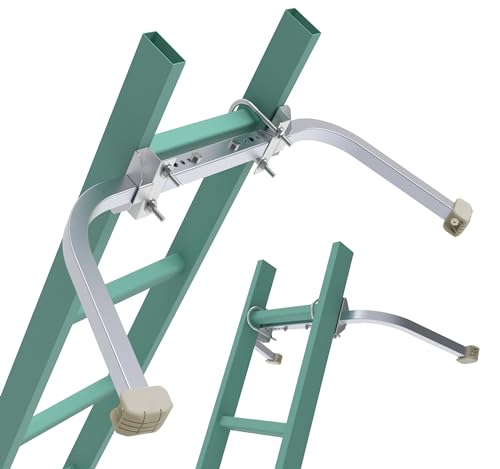
Foozet provides a lightweight aluminum standoff with a creamy non-slip rubber bottom mat and a patent-backed design. It protects walls and gutters while offering stability during roof access and gutter work. Best for those prioritizing lightweight handling and wall-surface protection during maintenance tasks. A minor limitation could be the kit’s balance under heavy loads or on very high extension ladders, where extra stabilization may be helpful.
Buying Guide: Key Considerations For Choosing A Ladder Stabilizer
- Material And Durability: Steel options typically offer higher weight capacity and durability, while aluminum provides lighter weight and easier maneuverability. Consider your ladder type and typical job duration.
- Weight Capacity: Select a model that exceeds your maximum expected load, including tools and movement during work.
- Compatibility: Ensure the stabilizer fits your ladder type (extension, straight, telescoping) and rung spacing. Some models include universal frames or adjustable holes.
- Protection Features: Look for non-marring tips, rubber pads, and coatings that protect gutters, siding, and paint finishes from damage.
- Installation Ease: Quick-connect or minimal hardware reduces setup time on job sites.
- Safety Certifications: While not always listed, certifications or explicit roof-placement suitability signal reliability for professional use.
- Portability: Heavier units may require more effort to move between job sites or up and down stairs.
Frequently Asked Questions
- What is a ladder stabilizer and why do I need one?
A ladder stabilizer increases stability, protects surfaces, and prevents ladder contact with gutters and siding during roof or wall work. - Can ladder standoffs fit all ladder types?
Many models are designed to fit major ladder types (extension, straight, telescoping), but check the product’s compatibility notes and mounting method. - Do ladder stabilizers affect ladder height or clearance?
They add height around the contact area and frame; verify your working reach and tool clearance before use. - Are metal stabilizers safe for gutters and paint finishes?
Yes, most are designed to minimize scratches and protect finishes with non-marring tips and protective pads. - How do I choose between steel and aluminum stabilizers?
Choose steel for higher durability and load capacity; choose aluminum for lighter weight and easier maneuverability. - What maintenance is required for stabilizers?
Regularly check fasteners, lubricate moving parts if applicable, and inspect rubber pads for wear and replace as needed.