Answering the need for reliable turtle tank filtration and water movement, this guide highlights five select pumps and filters that balance flow, filtration stages, and ease of use. These products are best for turtle keepers who want clear water, stable ammonia and nitrite levels, and simple upkeep. The top picks cover a range from small to larger tanks and accommodate both freshwater and brackish setups. Use the summary table to compare core specs at a glance.
| Product | Tank Range | Best For | Why Pick |
|---|---|---|---|
| TARARIUM Turtle Filter 290GPH (20-75 Gal) | 20-75 gal | Medium turtle tanks | Three-stage filtration including ceramic bio-balls; adjustable flow |
| Moonorange Aquarium Filter (3.5W, Up to 15 Gal) | Up to 15 gal | Small turtle tanks | Low power, compact, two installation modes |
| TARARIUM 290GPH Turtle Tank Filter for 20-85 Gal | 20-85 gal | Larger turtle habitats | Bottom suction design improves cleaning of debris |
| TARARIUM 222GPH 10W Internal Filter | 10-40 gal (typical) | Smaller to mid tanks | 4-in-1 filtration with ceramic media and adjustable flow |
| FRIRODSAY Filter for Turtle Tanks | Various shallow tanks | Amphibians and small reptiles | Quiet operation with activated carbon and strong suction |
TARARIUM Turtle Filter 290GPH — 20-75 Gallon Range

Best for mid-sized turtle tanks, this 290 GPH filter combines three filtration stages for reliable clear water. Stage 1 uses dense sponge to catch debris; Stage 3 employs ceramic bio-balls for beneficial bacterial growth. The pump’s adjustable flow supports changing turtle activity and tank size. Choose this if you need a balanced, all-in-one filtration solution with scalable flow for 20-75 gallon vivariums. A potential limitation is that very large or heavily planted tanks may require higher capacity filtration.
TARARIUM Water Flow Adjustable 20-75 Gal Pump

Best for flexible setups, this 4-in-1 internal filter offers adjustable flow and includes an auto-restart dry-run protection. It supports both freshwater and saltwater, making it suitable for mixed turtle habitats. Ideal for small to medium tanks that need a compact, submersible option with simple media cleaning. Avoid in tanks that require very high current or that rely on external filtration for bio-loads beyond the media’s capacity.
TARARIUM 290GPH Turtle Tank Filter (20-85 Gal)

Best for larger turtle habitats, this model uses a bottom suction system to pull debris from the tank bottom. Its dual-stage mesh sponge captures particulate matter, while ceramic bio-balls provide surface area for beneficial bacteria. Choose this when you need consistent filtration and improved bottom debris removal in 20-85 gallon tanks. A limitation is that bottom suction systems may require regular cleaning to prevent clogging in heavily fouling tanks.
FRIRODSAY Aquarium Filter For Turtle Tanks
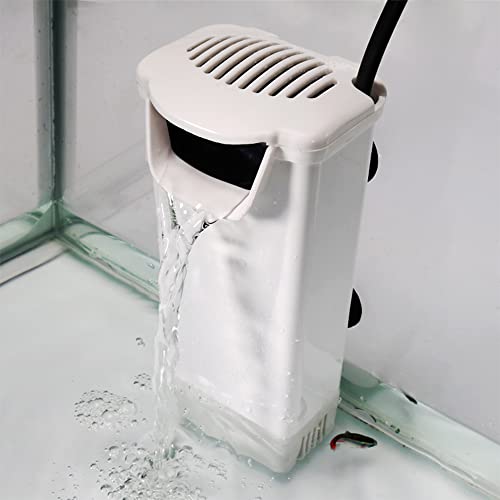
Best for small to mid-sized terrarium setups, this filter emphasizes quiet operation and robust biological and chemical filtration. It uses activated carbon to reduce odor and discoloration and is easy to install with suction cups or hanging clips. Pick this if you want a quiet, space-efficient option for shallow tanks or amphibian-friendly habitats. Might be less ideal for very large tanks with heavy filtration demands.
Tetra Whisper Internal Power Filter (5-10 Gal)
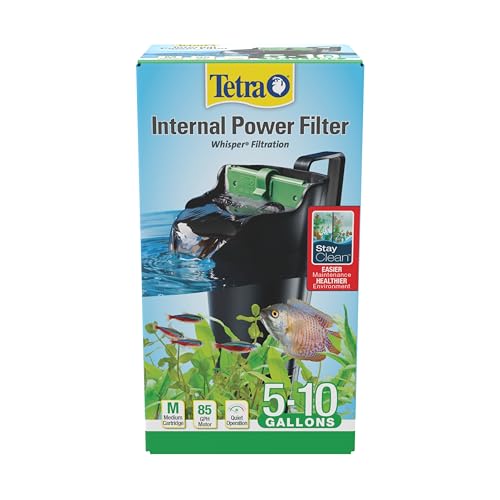
Best for mini turtle setups, this compact option is easy to install and maintains low noise levels. Its three-stage filtration and activated carbon help reduce odors and keep water clearer in small tanks. Choose this if you have a very small turtle enclosure and want a simple plug-and-play solution. Not ideal for larger habitats where higher GPH is required.
Buying Guide: Key Considerations For Turtle Tank Pumps And Filters
- Tank size compatibility: Match GPH flow to tank volume. Too high flow can stress turtles; too low flow fails to remove wastes.
- Filtration stages: Look for a multi-stage filter (mechanical, chemical, biological) to maintain clear water and stable water chemistry.
- Filtration media access: Prefer units with easy-to-clean media and readily available replacement cartridges or media pellets.
- Bottom suction vs. in-tank placement: Bottom-suction models help clear debris from the substrate but require regular cleaning to prevent clogs.
- Noise and vibration: Especially important in living spaces; choose models noted for quiet operation.
- Power efficiency: Compact filters with low wattage can reduce energy use for day-to-day operation.
- Maintenance frequency: Consider how often the media needs replacement or cleaning based on tank inhabitants and feeding schedule.
- Adaptability: If you plan to rehome or expand, select filters that work across a range of tank sizes.
FAQ
- What size filter do I need for a 20-gallon turtle tank? Answer: A filter rated around 200-300 GPH is typically suitable for 20 gallons, with adjustments for turtle activity and bio-load.
- Are internal filters better than external for turtle tanks? Answer: Internal filters are often easier to install in compact tanks, but external filters may offer higher capacity for larger tanks.
- How often should I replace filter media in turtle tanks? Answer: Replace mechanical media like sponges as needed when clogged; biological media typically lasts longer but should be rinsed or replaced per manufacturer guidance.
- Can I use a standard fish tank filter for turtles? Answer: Yes, as long as the flow rate, filtration stages, and media are appropriate for turtle waste and tank size.
- Is bottom-suction filtration better for turtle tanks? Answer: It helps remove debris from the substrate but requires regular cleaning to prevent buildup and clogging.
- What maintenance tasks help keep turtle water clear? Answer: Regular water changes, cleaning of debris, rinsing or replacing media, and monitoring ammonia and nitrite levels are essential.