Answering the question, these power rakes and turf sweepers are designed to maintain artificial grass by lifting flattened fibers, removing debris, and keeping blades upright. The best picks suit different yard sizes and maintenance needs—compact tools for small patios, mid-size machines for medium lawns, and high-efficiency sweepers for regular upkeep. This guide highlights five top options and explains who each one is best for, with a practical buying table to compare key points at a glance.
Buyer’s quick-reference summary table
| Product | Best For | Working Width | Notes |
|---|---|---|---|
| Roll & Comb 131E | Small to medium synthetic lawns | 13″ (approx.) | Two-pass cleaning; compact; good for routine maintenance |
| Artificial Turf Sweeper 302e | Medium-sized areas, regular upkeep | 12.5″ | Adjustable height; 25L collector |
| ORIENTOOLS Artificial Turf Rake | Light to moderate debris, garden/ patios | Up to 54.7″ reach | 4-section adjustable handle; durable brush |
| YEELOR Turf Rake | Versatile, adjustable height for varied users | Adjustable 32–61″ | PA nylon bristles; strong handle |
| boldworks Electric Power Broom | Small yards and tight spaces | 17″ path | 2-3 sweeps typical; restores turf fibers |
Roll & Comb 131E Artificial Grass Sweeper, Corded Electric

The Roll & Comb 131E uses a compact 300W motor and a 13″ working width, designed to sweep, comb, and lift turf fibers for routine maintenance. It employs a two-pass cleaning method: push forward to collect light debris and pull backward to lift fibers and restore the turf’s natural look. Best for small to medium synthetic lawns. Caution: ensure the tube connection is securely tightened before operation to avoid loose parts during use.
Artificial Turf Sweeper 302e, Corded Electric Lawn Rake

This 1,400W sweeper delivers a 12.5″ working width and a 25-liter collector, making it suitable for medium-sized areas up to about 3,500 sq ft. It cleans, collects, and restores upright blades with a forward push and backward pull. Height-adjustable comb settings help tailor the brushing depth to turf thickness, offering a balance of cleaning and revitalizing action. Best for mid-sized lawns; better for regular maintenance than deep dethatching. Caution: higher power may require better cord management to avoid tangling.
ORIENTOOLS Artificial Turf Rake, 54″ Reach
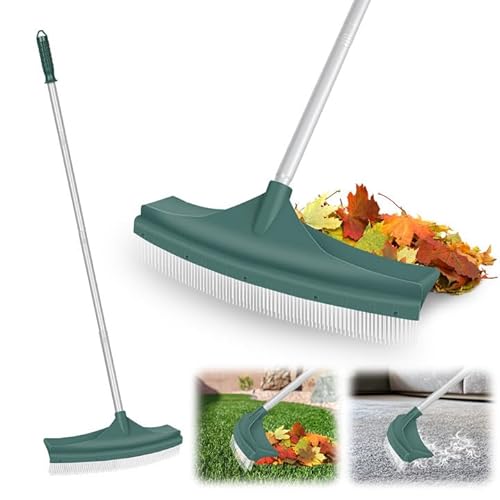
ORIENTOOLS offers an upgraded rake head with a four-section, adjustable aluminum handle reaching up to 54.7 inches. The brush uses premium PBT bristles for durability and a steady sweep without damaging turf. Best for larger patios or areas where bending is impractical; choose this if you need extra length and a sturdy, debris-focused rake. Limitation: longer handles may be heavier to manage for shorter users or in tight spaces.
YEELOR Adjustable Turf Rake with Long Handle

YEELOR’s turf rake features a highly adjustable handle with three length options (32.7″, 46.8″, 61″). The bristles are PA nylon, noted for durability and resistance to wear and heat. Best for households wanting adjustable ergonomics and a robust rake for leaves, pet hair, and fallen debris. Caution: ensure the handle is fully locked at your preferred length to avoid slippage during use.
boldworks Electric Power Broom Artificial Turf Sweeper
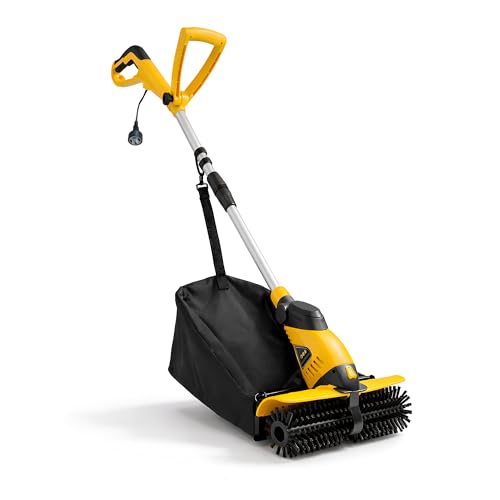
This 17″ wide power broom cleans in 2-3 sweeps, suitable for small gardens and compact turf areas. The rotating brush lifts flattened fibers while sweeping debris, helping restore the natural upright look of artificial grass. Best for tight spaces or quick touch-ups. Limitation: not ideal for very large lawns due to its smaller footprint; consider a larger model for extensive areas.
Buying Guide: Key Considerations And Comparisons
- Yard size and cleaning scope: Smaller spaces benefit from compact units like the Roll & Comb 131E or boldworks models, while larger yards may justify mid-range sweepers with bigger working widths and collection bags.
- Power and performance: Corded motors ensure consistent power, but consider cord length and maneuverability. Higher wattage generally means quicker fiber lifting and debris collection, but may increase weight.
- Brush design and material: Look for spiral or dense-tooth brushes that lift flattened fibers without tearing blades. Materials like PBT bristles offer durability and gentle turf interaction.
- Adjustability: Height and handle length adjustments improve comfort and effectiveness, especially for users of varying heights or those who prefer not to bend.
- Debris capacity: Larger collection bags reduce trips to dump debris. For frequent use, a model with a higher capacity can save time.
- Ergonomics and safety: Consider grip comfort, weight distribution, and a design that minimizes strain during extended grooming sessions.
Frequently Asked Questions
- What is the main benefit of using a power rake on artificial turf?
It lifts flattened fibers and removes debris, restoring the turf’s upright appearance and improving texture. - Should I choose a corded or cordless power rake for artificial turf?
Corded models typically offer consistent power for longer sessions; cordless units are more portable but may have limited run time. - How often should I rake artificial turf?
For routine maintenance, a light pass every few weeks during active seasons is common; deeper cleanings can be scheduled seasonally or after heavy debris events. - Can these tools damage artificial turf?
When used with appropriate depth settings and proper technique, most turf rakes are designed to be gentle on synthetic fibers; always follow manufacturer guidelines. - Is a larger width better for every yard?
A wider cleaning path can cover ground faster, but maneuverability and storage considerations matter for smaller spaces. - Do any of these tools come with a warranty?
Warranty terms vary by model and seller. Verify coverage and duration before purchase.