Answering your search for the best lawn sweeper for artificial turf, this guide highlights five top options designed to groom, lift blades, and collect debris without tearing synthetic fibers. Ideal buyers range from DIY homeowners maintaining small patios to homeowners with larger artificial lawns needing regular upkeep. The products below balance powerful cleaning with turf-friendly design, helping you choose the right level of agitation, collection capacity, and maneuverability. A quick comparison table is included to help you scan key specs at a glance.
| Product | Working Width | Collection Bag | Power Type | |
|---|---|---|---|---|
| VEVOR Push Lawn Sweeper (21″) | 21 inches | 3.5 ft³ | Manual | Smaller to mid-size lawns; budget-friendly, easy storage |
| Electric Artificial Turf Sweeper (16″) Boldworks | 16 inches | 45 L | Electric | Medium areas; quick, one-pass cleaning |
| Roll & Comb Artificial Turf Sweeper (19.8″) | 19.8 inches | 25 L | Corded Electric | Compact to mid lawns; adjustable depth |
| SWIPESMITH 16” Artificial Turf Vacuum | 16 inches | 55 L | Electric | Spring/fall debris; high-capacity collection |
| ZEGJAW Cordless 15” Artificial Turf Sweeper | 15 inches | 45 L | Battery | Smaller yards; cordless convenience |
VEVOR Push Lawn Sweeper, 21-Inch Debris Picker

Best for smaller lawns and tight spaces, this VEVOR model uses two spinning brushes with a thickened design to maximize debris pickup. Its 21″ sweeping width targets leaves, grass clippings, and light debris in a single pass, reducing work time. The 3.5 ft³ hopper offers ample capacity before dumping. Brush height is adjustable by knob, allowing use on sidewalks, driveways, or garden paths without tools. Best to choose when you want straightforward, no-fuss operation and immediate impact in one or two passes. A potential limitation is that extreme wet conditions may reduce efficiency.
Electric Artificial Turf Sweeper 16” (Boldworks)

Better for medium-sized artificial lawns, this 16″ electric sweeper uses a high-speed 4000 RPM spiral brush to lift flattened turf fibers and restore their upright look. The 45-liter collection bag captures leaves, dirt, and pet hair in one pass, while the compact width lets you reach tighter spaces. It is a strong pick for quickly revitalizing turf with foot traffic or outdoor furniture impressions. A caveat is that the MPN notes a single cleaning path may still require a second pass for heavy buildup in very thick turf areas.
Roll & Comb Artificial Turf Sweeper, 25 Liter

Best for compact to mid-sized artificial lawns, this corded electric sweeper combines cleaning, combing, and debris collection in one pass. Its adjustable height settings match different turf thickness, helping restore fiber lift and a natural appearance. With a 25-liter bag, you can clean larger sections before dumping. Consider that corded power requires proximity to an outlet and may limit mobility in very large yards.
SWIPESMITH 16” Artificial Turf Vacuum
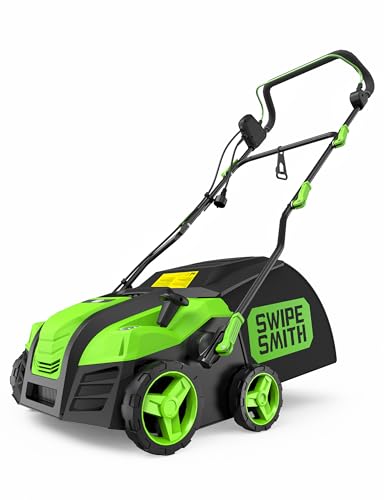
Choose this for higher-capacity cleaning with a 55-liter bag and a 16″ wide brush area. The 15-amp motor provides robust suction and grooming power, with a five-position brush height and adjustable rod for different user heights. It is well-suited for frequent upkeep on medium to larger artificial lawns. A limitation is that the product notes no dethatching function, so it focuses on grooming and debris collection rather than deep thatch removal.
ZEGJAW 15” Cordless Turf Sweeper

Best for small to medium yards, this cordless 15″ sweeper uses a 4.0Ah battery (Makita-compatible) to deliver freedom from outlets while offering five-position depth adjustment for precise bristle contact. The 45-liter bag means you can collect a substantial amount of debris before dumping. This model is ideal for users prioritizing mobility and quiet operation, though battery life may limit all-day use on very large properties.
Buying Guide: How To Choose The Right Artificial Turf Sweeper
- What size is your lawn and how often will you sweep? Larger yards benefit from wider brushes and bigger bags; smaller spaces favor cordless or compact models for maneuverability.
- Do you need cordless convenience or a power cord? Cordless models offer mobility but depend on battery life; electric corded units provide consistent power but require outlets and cord management.
- What debris do you typically remove? If you mostly handle leaves and pet hair, a high-capacity bag and gentle bristle design protect turf fibers; for gritty sand, look for deeper brushing depth and sturdier construction.
- Is adjustable depth important? Five- to 10-position depth settings help tailor brush contact depth to turf thickness and wear, improving results across seasons.
- Maintenance and replacement parts: Check brush wear indicators and whether replacement brushes are readily available to extend the tool’s life and maintain performance.
Practical Tips For Best Results
- Sweep in multiple passes across the same area when debris is heavy, starting with wider passes and finishing with slightly deeper bristle settings if needed.
- When using a bag, ensure it’s securely attached and not overfilled to avoid clogging and reduce emptying frequency.
- Regularly inspect brushes for wear and tangling; replace or clean to prevent reduced performance and turf friction.
Frequently Asked Questions
- What is the best lawn sweeper for artificial turf? It depends on yard size, power preference, and whether you want corded or cordless operation. Larger areas typically benefit from higher-capacity bags and wider sweep paths.
- Can a lawn sweeper damage artificial turf? Choosing turf-friendly brushes and maintaining proper depth settings minimizes risk to fibers. Avoid aggressive settings on very delicate turf.
- Do you need a power source for synthetic turf sweepers? Cordless models offer portability; corded electric models provide steady power for continuous cleaning.
- How often should I sweep artificial turf? Frequency depends on foot traffic and debris. Regular light sweeping prevents buildup and keeps the blades upright.
- What should I look for in a replacement brush? Look for bristles designed to resist tangling and耐 wear, with easy compatibility for your model.
- Is a larger bag always better? A larger bag reduces dumping frequency but can add weight and require more effort when removing. Balance capacity with ease of handling.