The best gate ramp options for trailers are those that reduce strain, improve safety, and fit your trailer’s side rail height and gate size. This guide highlights five lift-assisted gate solutions ideal for open utility trailers with 12–24 inch side rails and 4–6 foot gates or ramps. It helps defined buyers choose based on installation complexity, weight, and use case—whether you’re a DIY homeowner, a professional contractor, or hauling ATVs and equipment regularly.
Summary table of selected products:
| Product | Brand | Best For | |
|---|---|---|---|
| Trailer Gate Lift Assist, 2-Sided | JY PERFORMANCE | Open utility trailers; easy hand lift | Requires drilling for installation |
| Genuine GORILLA-LIFT 2-Sided | GORILLA-LIFT | Heavy-duty gates; high reliability | Original design may have limited compatibility notes |
| Trailer Gate Lift Assist Kit, 2-Sided | Gledewen | Most open utility trailers; easy one-person lift | Maximum weight limit commonly cited as 400 lb |
| NAZOU Trailer Tailgate Lift Assist Kit | NAZOU | Heavy-duty gates; ramp integration | Installation details vary by trailer model |
| SPARKWHIZ Weld On Trailer Ramp Hinge | SPARKWHIZ | Durable hinge replacements; versatile ramps | Not a full lift-assist system on its own |
Trailer Gate Lift Assist, 2-Sided Lift Assist (JY PERFORMANCE)
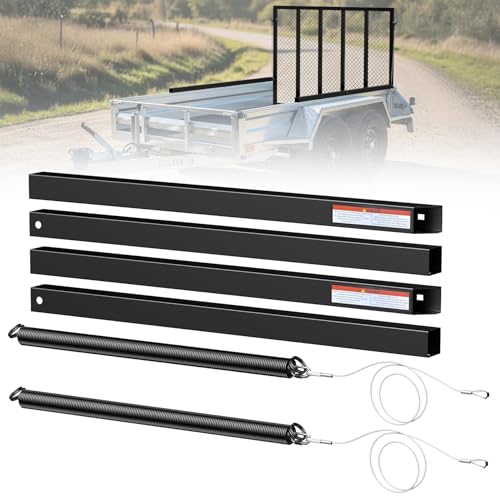
Best for: DIY users with open utility trailers and side rails 12–24 inches high. This lift assist uses a two-sided design to balance the gate and ramp, reducing uneven stress and wear over time. Installation involves drilling, but the system makes hand lifting near weightless after setup. Choose this if you want a straightforward, two-sided support that minimizes flex while opening or closing.
Key reasons to consider: The two-sided mechanism helps distribute load, potentially extending hinge life. Suitable for 4–6 foot gates or ramps. Caution: Drilling is required, and user must verify compatibility with their trailer model.
Genuine GORILLA-LIFT 2-Sided Trailer Tailgate Lift Assist
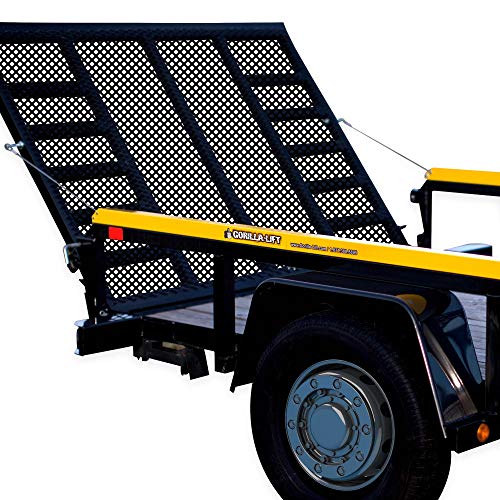
Best for: Heavy-duty trailer gates requiring reliable, low-effort operation. The original Gorilla-Lift design emphasizes near-weightless tailgate movement, helping prevent injuries and damage to hinges and framing. Choose this if you need proven performance for demanding or frequent use.
Why it stands out: It’s positioned as a high-quality, durable lift assist that supports heavy-duty gates with minimal effort. Limitation: As with any lift assist, ensure your trailer’s rails and gate dimensions align with the product’s specifications to avoid fit issues.
Trailer Gate Lift Assist Kit, 2-Sided (Gledewen)

Best for: Open utility trailers with 12–24 inch side rails and 4–6 foot gates. It advertises easy installation in about 30 minutes and one-hand operation after setup. This makes it a good choice for operators prioritizing quick setup and consistent lift assist performance.
Why selected: It emphasizes hands-free operation and an enclosed safety design. Limitation: Specified maximum tailgate or ramp weight often cited as 400 pounds; verify your gate’s weight before purchasing.
NAZOU Trailer Tailgate Lift Assist Kit

Best for: Users needing adjustable lifting tension to fit various tailgates and ramps. The kit is designed for two-sided support on 12–24 inch rails with 4–6 foot gates or ramps, improving lift consistency and lowering risk of strain during operation.
Why selected: The adjustable tension feature helps tailor the lift to different gate weights. Limitation: Compatibility can vary by trailer model; check rail type (square, round, or angle iron) and gate weight prior to purchase.
SPARKWHIZ Weld On Trailer Ramp Hinge

Best for: Replacing or upgrading ramp hinges on trailers where a sturdy, greaseable hinge is needed. This is a good choice for users seeking durable, versatile hinges that can handle regular loading and unloading tasks.
Why selected: Heavy-duty garaged or worksite environments benefit from corrosion-resistant steel and robust hinging. Limitation: This is a hinge component rather than a complete lift-assist system; ensure your setup can integrate with a lift mechanism if required.
Buying Guide
What should you consider when choosing a gate lift assist for trailers?
- Trailer compatibility: Confirm rail height (12–24 inches) and gate/ramp height (4–6 feet). Ensure the kit matches your trailer’s frame design and mounting points.
- Weight and capacity: Verify the weight of your gate or ramp and compare it with the product’s maximum lift capacity. Exceeding capacity reduces performance and could cause failure.
- Installation effort: Some kits require drilling or welding; others are simpler bolt-on solutions. Pick based on your DIY comfort and tools available.
- One- or two-sided design: Two-sided systems distribute load more evenly, reducing stress on hinges. One-handed operation is a plus for frequent use.
- Durability and materials: Aluminum ramps cut weight but metals like galvanized steel or treated components offer long-term resistance to corrosion and wear.
- Safety features: Look for enclosed safety housings, anti-slam mechanisms, and non-slip surfaces on ramps to prevent accidents during loading and unloading.
FAQ
- Q: Is a lift assist worth it for a light-duty trailer gate?
A: Yes, if you frequently load and unload, as it reduces strain and improves safety. - Q: Do all lift assists fit every trailer?
A: No; check side rail height, gate size, and mounting points to ensure compatibility. - Q: Can I install a lift assist by myself?
A: Many kits are designed for DIY installation, but some require drilling or welding; follow manufacturer instructions. - Q: What maintenance is needed?
A: Inspect pivot points, lubricate hinges or joints, and check for corrosion or wear on rails and mountings. - Q: Should I choose a two-sided system over a single-sided one?
A: Two-sided systems generally provide better load balance and smoother operation, especially on heavier gates.