Selecting the best rechargeable batteries for solar lights is crucial for maintaining long-lasting and efficient outdoor lighting. This article features a detailed comparison of top AA rechargeable batteries designed specifically for solar garden lights, string lights, pathway lights, and other solar-powered devices. The options vary in capacity, durability, and charging convenience to suit various needs.
| Battery | Brand | Capacity | Recharge Cycles | Special Features |
|---|---|---|---|---|
| EBL Solar AA Battery Rechargeable | EBL | 1300mAh | Up to 1200 times | Low-self discharge technology, high capacity |
| Lightalent Ni-MH AA Rechargeable Batteries | Lightalent | 600mAh | Not specified | Pre-charged 30%, suitable for solar charging |
| Solar Lights Batteries AA High Capacity | Kruta | 1600mAh | Not specified | High temperature tolerance, long-lasting |
| JiajaX Ni-MH Rechargeable AA Batteries | JiajaX | 600mAh | 500 cycles | Cost-effective replacement, environmentally friendly |
| BEVIGOR Rechargeable AA Batteries | BEVIGOR | 1000mAh | Up to 1300 times | Eco-friendly, dual charging methods |
EBL Solar AA Rechargeable Batteries 1300mAh

The EBL Solar AA Rechargeable Batteries are tailored for outdoor solar lights and common household gadgets. With a capacity of 1300mAh, they offer extended power duration compared to standard rechargeable batteries. They feature low self-discharge technology, enabling the battery to retain more than 80% of its capacity even after 3 years of use. These batteries support up to 1200 recharge cycles, reducing frequent replacements and offering convenience.
Their 1.2V NiMH chemistry ensures compatibility with solar garden lights, mouse devices, TV remotes, and string lights. These features make them an efficient and cost-effective option for reliable outdoor lighting.
Lightalent Ni-MH AA Rechargeable Batteries 600mAh
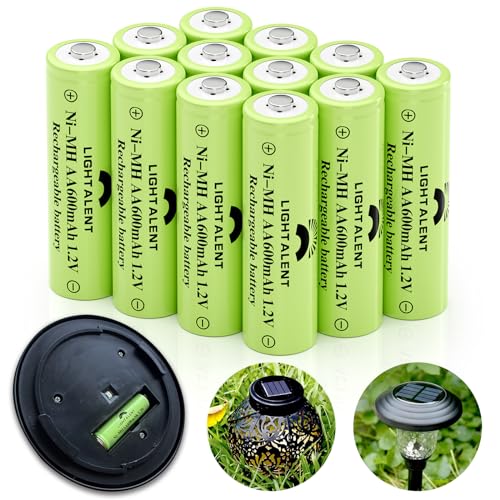
The Lightalent Ni-MH AA Rechargeable Batteries come with a 600mAh capacity and are pre-charged with 30% power for immediate use. Their design allows charging through solar cell lights or standard chargers, offering flexibility in recharging methods. Although smaller in capacity, these batteries fit various solar-powered outdoor devices.
Known for safety and reliability, Lightalent batteries require initial charging before optimal use due to transport safety pre-charging limits. This pack includes twelve batteries, ideal for multiple solar light setups or replacement needs.
Kruta AA 1600mAh High Capacity Solar Batteries
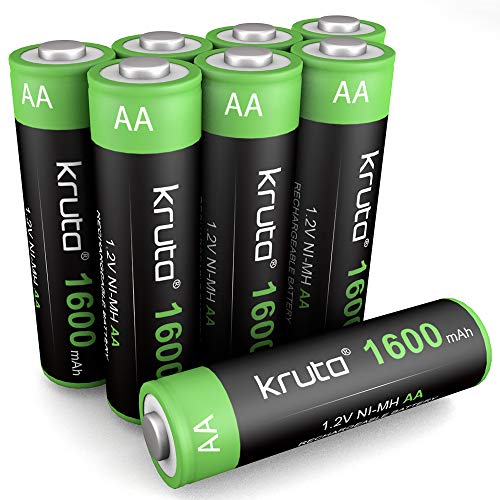
With the highest capacity among these options, the Kruta AA 1600mAh Batteries provide a robust power supply ensuring solar lights remain illuminated throughout the night. Their superior heat tolerance allows operation in temperatures ranging from -4℉ to 140℉, which is excellent for extreme weather conditions.
These NiMH batteries are compatible with a broad range of applications beyond solar lights, including TV remotes, wireless mice, and radios. Their capacity outperforms many standard rechargeable AA cells, making them a strong choice for extended runtime on solar lighting systems.
JiajaX Ni-MH AA Batteries for Solar Lights 600mAh

The JiajaX Ni-MH AA Batteries offer a balanced option for cost-conscious consumers who want reliable replacement batteries for solar outdoor lighting. These 600mAh batteries support about 500 recharge cycles, reducing the need for frequent repurchases and lowering environmental impact.
They work well for solar garden lights, landscaping, string, and pathway lights. Their standard NiMH chemistry makes them versatile for other household devices as well. This pack of four suits users needing replacement batteries for multiple solar light units.
BEVIGOR Rechargeable AA Batteries 1000mAh 12 Pack

The BEVIGOR Rechargeable AA Batteries provide 1000mAh capacity and are capable of up to 1300 recharge cycles. Their eco-friendly design emphasizes material safety and environmental preservation. BEVIGOR batteries can be recharged via two methods: solar charging or a conventional battery charger.
They operate efficiently across a wide temperature range from -4℉ to 140℉, making them suitable for various environments. Including twelve batteries in the pack, BEVIGOR is an excellent option for users needing sustained power for garden lights, string lights, and other outdoor solar devices.
Buying Guide for Solar Light Batteries
Battery Capacity
Battery capacity directly impacts how long your solar lights stay illuminated each night. Higher capacity (measured in mAh) means longer runtime. For solar lights, a capacity of 1000mAh or more is generally preferred to keep lights burning through the night.
Recharge Cycles and Longevity
The number of recharge cycles indicates how many times a battery can be reused before its capacity significantly deteriorates. Batteries with over 1000 recharge cycles offer better long-term value and cost savings. NiMH batteries usually provide higher recharge counts than NiCd types.
Self-Discharge Rate
A low self-discharge rate prevents battery capacity loss when stored or unused for extended periods. Batteries with advanced low self-discharge technology retain charge longer, reducing the need for frequent recharging and ensuring reliable performance after longer storage.
Compatibility and Size
Most solar garden lights use standard AA or AAA sized batteries. It is essential to choose batteries with the exact size and voltage (typically 1.2V for NiMH rechargeable) to ensure compatibility and avoid damage to the device. Always check the light manufacturer’s recommendations.
Charging Method
Many solar batteries can be recharged by solar lights directly or standard battery chargers. Some batteries come pre-charged partially for safe transport but need full charging before use. It is helpful to select batteries adaptable to both charging methods for convenience in different settings.
Operating Temperature Range
Batteries that withstand extreme temperatures expand usage possibilities across seasons and climates. High quality solar batteries maintain performance in both cold winters and hot summers, important for outdoor environments exposed to weather variations.
Environmental Considerations
Rechargeable batteries reduce landfill waste compared to disposables. Choosing batteries free from heavy metals and with good recycling options supports environmentally responsible use.